Monadology
by Gottfried Wilhelm Leibniz · La Monadologie
Assigned by 3 of the 9 reading lists, catalogue entry only
- Written
- 1714
- Form
- Treatise
- Language
- French
- Length
- Short · 25 ppunder 120 pages
- Difficulty
- Difficult4 of 5 for a first-year reader
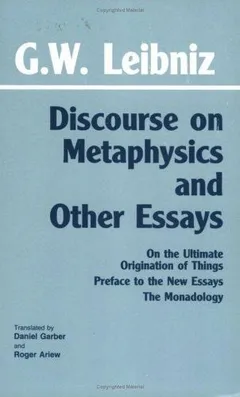
We recommendDiscourse on Metaphysics and Other Essays, translated by Daniel Garber and Roger AriewHackett, 1991A clear translation of the Monadology with the Discourse and the Principles of Nature and Grace that explain it.
These links go straight to Amazon and Bookshop.org and earn this site nothing today. Prices are the same either way. How this works.
Ninety numbered paragraphs that Leibniz wrote in Vienna in 1714 as a summary of his mature philosophy. The world consists of monads, simple unextended substances with no windows, each perceiving the whole universe from its own point of view. God, whose existence Leibniz argues from the principle of sufficient reason, has chosen the best of all possible worlds and coordinated the monads in a pre-established harmony. The final sections treat the soul, the body, and the City of God.
No reading guide yet
The catalogue entry above is complete: the dates, the form, the themes and every program that assigns Monadology are verified against each program's published list.
What is missing is the part that takes real work: the summary, the key passages, and a recommended translation. The edition named below is the one most programs assign, so the buy links are useful already.