Euthyphro
by Plato · Εὐθύφρων
Assigned by 2 of the 9 reading lists, catalogue entry only
- Written
- c. 395 BCE
- Language
- Greek
- Length
- Short · 20 ppunder 120 pages
- Difficulty
- Approachable1 of 5 for a first-year reader
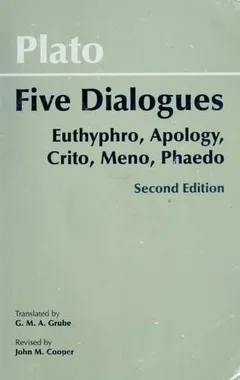
We recommendFive Dialogues, translated by G. M. A. Grube, revised by John M. CooperHackett, 2002The usual first Plato text for students, bound with the trial and death dialogues it introduces.
These links go straight to Amazon and Bookshop.org and earn this site nothing today. Prices are the same either way. How this works.
On his way to answer the indictment against him, Socrates meets Euthyphro, a self-styled religious expert who is prosecuting his own father for the death of a labourer. Socrates asks him to define piety so that he can use it in his own defence. Euthyphro offers several definitions, including that the pious is what the gods love, and Socrates asks whether the gods love it because it is pious or it is pious because they love it. Every answer fails, and Euthyphro hurries away.
No reading guide yet
The catalogue entry above is complete: the dates, the form, the themes and every program that assigns Euthyphro are verified against each program's published list.
What is missing is the part that takes real work: the summary, the key passages, and a recommended translation. The edition named below is the one most programs assign, so the buy links are useful already.