Hamlet
Assigned by 6 of the 9 reading lists
- Written
- c. 1600
- Era
- Renaissance
- Form
- Tragedy
- Language
- English
- Length
- Medium · 340 pp120 to 300 pages
- Difficulty
- Demanding3 of 5 for a first-year reader
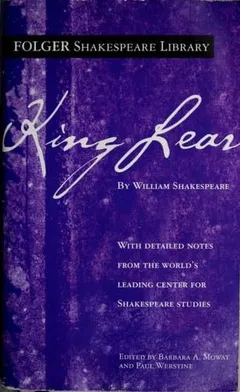
We recommendHamletFolger Shakespeare Library (Simon and Schuster), 2003Facing-page glosses, clean text, and cheap; the edition most students actually use.
Also good
- Arden Shakespeare. Prints the early quarto and the folio separately, which is the honest way to see that there is no single Hamlet.
These links go straight to Amazon and Bookshop.org and earn this site nothing today. Prices are the same either way. How this works.
Prince Hamlet comes home to Elsinore to find his father dead, his uncle Claudius on the throne, and his mother Gertrude married to him inside a month. His father's ghost appears on the battlements and says he was poisoned by his brother, and demands revenge without harming the queen. Hamlet puts on an antic madness, drives away the woman he loved, and stages a play about a poisoning to watch the king's face. He kills the counsellor Polonius through a curtain, is shipped toward England and an arranged execution, returns to find Ophelia drowned, and dies in a rigged fencing match that also kills Gertrude, Laertes and Claudius.
Why it's on the list
Hamlet is where a character first appears to have more inside him than his play can use. The soliloquies do not advance the plot; they let an audience overhear a mind arguing with itself, and after that the interior life became the main business of English literature. Everything downstream is marked by it: the novel's free indirect style, Coleridge and Goethe inventing the sensitive intellectual who cannot act, Freud reading the son and the mother, Nietzsche reading the man who sees too clearly to move, the endless modern rewritings from Joyce to Stoppard. It is also the most performed and most quoted play in any language, which means it arrives pre-worn. Programs assign it because it is the best test of whether you can read something famous and still be surprised by it.
Key themes
- The self and identity
- Hamlet is the first character in English drama who treats his own consciousness as a problem, and who suspects that what shows on the outside can never match what he has within.
- Death and mortality
- Death here is physical and undignified: a poisoned ear, a body stuffed under a stair, a jester's skull that smells, worms eating a king and a beggar at the same table.
- Madness and the irrational
- Hamlet's madness is announced in advance and performed, and Ophelia's is real. Putting them in the same play makes it impossible to be sure which is which.
- Guilt and redemption
- Claudius can pray and cannot repent, because he will not give up what the murder bought. His failed prayer is the most theologically exact moment in the play.
- Family and inheritance
- Three fathers and three children, Hamlet, Laertes and Fortinbras, each answering for a dead father in a different way, and only the least thoughtful of them gets the kingdom.
Overview
Hamlet was written around 1600 and exists in three early versions that do not match. The first quarto of 1603 is short, fast and probably reconstructed from memory by actors; it contains a version of the most famous soliloquy that begins with a line nobody quotes. The second quarto of 1604 is the longest text. The folio of 1623 cuts some four hundred lines and adds others. Every modern edition is an editor’s blend, and the play you read is a decision somebody made. Uncut, it runs about four hours, which is longer than any company has usually performed it.
Shakespeare did not invent the story. A Danish prince who feigns madness to avenge his father appears in Saxo Grammaticus and in a French retelling by Belleforest, and there was an earlier English revenge play about Hamlet on the London stage in the 1580s that is now lost. Revenge tragedy was a known genre with known furniture: a ghost, a delay, a play within a play, a pile of bodies. What Shakespeare did was slow the machinery down and let the avenger think.
The result is a play whose plot could be summarised in a paragraph and whose interest is almost entirely elsewhere: in seven soliloquies, in a comic scene with two gravediggers, in the courtesies Hamlet extends to actors and denies to his mother. Read it as a revenge tragedy that keeps getting interrupted by a man.
What happens
Act 1. Sentries on the battlements have seen a ghost. Horatio brings Hamlet, who has been in mourning while the court celebrated his uncle’s wedding to his mother. The ghost tells him it is his father, murdered by Claudius with poison poured in his ear, and orders him to avenge the murder but leave Gertrude to heaven. Hamlet swears his friends to secrecy and warns them he may start behaving strangely.
Act 2. Polonius, the lord chamberlain, decides Hamlet’s disorder is lovesickness for his daughter Ophelia and proposes to test it by setting her in his way while the king listens. Claudius also imports Hamlet’s school friends Rosencrantz and Guildenstern as informers. A company of travelling players arrives. Hamlet, watching an actor weep over the death of Hecuba, is disgusted by his own inaction and asks them to perform a play about a murdered duke, into which he will insert some lines.
Act 3. The nunnery scene: Hamlet, knowing he is watched, savages Ophelia. The play is performed; Claudius rises and leaves; Hamlet takes this as proof. He finds Claudius kneeling in prayer and does not kill him, arguing that a man killed at his devotions would go to heaven. He goes instead to his mother’s room, hears someone behind the arras, stabs through it and finds Polonius. The ghost reappears to remind him of the point.
Act 4. Hamlet is sent to England with sealed orders for his execution. Ophelia loses her mind and sings; her brother Laertes returns from France in arms, and Claudius redirects his fury at Hamlet. News comes that Hamlet has escaped after pirates attacked his ship. Ophelia drowns.
Act 5. In a graveyard two workmen argue about whether she is entitled to Christian burial and toss up skulls, one of which was the court jester’s. Hamlet, calm for the first time, grapples with Laertes in her grave. Claudius arranges a fencing match with an unblunted and poisoned blade and a poisoned cup in reserve. Gertrude drinks it. Laertes and Hamlet wound each other with the same sword. Laertes names the plot; Hamlet kills Claudius at last, both by blade and by cup, and dies asking Horatio to tell the story. Fortinbras of Norway marches in and takes the kingdom.
How to read it
See it or hear it before or alongside reading it. Even a mediocre production teaches you things about the pacing that print hides, and the Branagh, Tennant and Almereyda films are all easy to find and all read the prince differently.
On a first pass, resist the question of why Hamlet delays. It has been the central critical question for two centuries and it presupposes that the play is a psychological case study. Try the other question first: what would acting well look like here? He has a ghost’s word, no witnesses, no court that would believe him, and a target who is the anointed king.
Read the soliloquies as arguments, with their premises visible. Notice that the most famous one is impersonal, and that the most revealing ones are the two where he abuses himself for talking instead of doing.
Watch the minor characters. Polonius is a fool who is often right. Horatio is the only person Hamlet never lies to. Ophelia’s mad scene distributes flowers with meanings, and the text expects you to know some of them; use the notes. Gertrude has few lines and every reading of the play depends on what you decide she knew.
Any well-annotated edition works. The Folger is cheapest and clearest for a first reading; the Arden third series is where to go when you want to know why your line reads as it does.
Questions it raises
- Is the ghost telling the truth, and how would anyone in the play establish that it is?
- Hamlet spares Claudius at prayer on a theological argument. Does he believe it, or is it an excuse?
- Is the antic disposition entirely feigned by the end of act 4?
- What does Gertrude know, and when does the play let you decide?
- Laertes and Fortinbras both avenge fathers without hesitating. Does the play admire them?
- Hamlet’s last act is to arrange who tells his story. Why should that matter more to him than the throne?
Highlights
To be, or not to be, that is the question: Whether 'tis nobler in the mind to suffer The slings and arrows of outrageous fortune, Or to take arms against a sea of troubles And by opposing end them.
Read it as a general argument rather than a personal one. Hamlet says "we" and "us" throughout and never once mentions Claudius, his father or revenge.
What a piece of work is a man, how noble in reason, how infinite in faculties, in form and moving how express and admirable, in action how like an angel, in apprehension how like a god.
The speech ends by calling this paragon a quintessence of dust. The whole play lives in the gap between the two halves of that sentence.
The rest is silence.
His last words, after he has spent five acts unable to stop talking, and after insisting that Horatio live to tell the story.
My words fly up, my thoughts remain below. Words without thoughts never to heaven go.
Claudius alone at prayer, overheard by nobody. It is the one moment the audience knows more about the king than Hamlet does.
There is nothing either good or bad but thinking makes it so.
Said lightly to Rosencrantz and Guildenstern, and worth holding against everything Hamlet later says about conscience and the undiscovered country.