Politics
by Aristotle · Πολιτικά
Assigned by 6 of the 9 reading lists
- Written
- c. 335 BCE
- Form
- Political theory
- Language
- Greek
- Length
- Medium · 300 pp120 to 300 pages
- Difficulty
- Demanding3 of 5 for a first-year reader
We recommendAristotle's Politics, translated by Carnes LordUniversity of Chicago Press, 2013Literal, with a good glossary and a substantial introduction, and the second edition corrects the first.
Also good
- T. A. Sinclair, revised by Trevor Saunders. The most readable version, with running summaries that help when the argument breaks off.
- C. D. C. Reeve. Heavily annotated and cross-referenced to the Ethics, which is where many arguments are completed.
These links go straight to Amazon and Bookshop.org and earn this site nothing today. Prices are the same either way. How this works.
Aristotle's study of the city as the association in which human beings can live well rather than merely live. Book I derives the city from household and village, and defends natural slavery and male rule in arguments among the worst he ever made. Book II reviews proposed constitutions, including the common property of Plato's Republic. Book III asks who counts as a citizen and how office should justly be distributed. Books IV to VI survey actual regimes, set monarchy, aristocracy and polity against tyranny, oligarchy and democracy, and analyse how revolutions happen and how rulers survive. Books VII and VIII describe the best city and its schooling.
Why it's on the list
This is the first work of political science in the sense that it collects and compares real constitutions before generalising. Aristotle and his school gathered accounts of over a hundred and fifty of them, and the argument is built on cases rather than on an ideal. Three of his moves are still in use. He treats the political community as existing for a purpose, so that regimes can be judged by whether they produce good lives rather than only stability. He identifies the mixed constitution and a large middle class as the conditions of durable government, an argument the American founders read closely. And he makes citizenship a matter of ruling and being ruled in turn, which is the root of the republican tradition that runs through Machiavelli, Harrington, Madison and Arendt. Its defence of slavery is also assigned, because it has to be answered.
Key themes
- Society and the state
- The city is prior to the individual in the way a whole is prior to its parts, which is why Aristotle thinks a solitary human is not self-sufficient but defective.
- Justice
- Every faction has a partial claim: the rich point to wealth, the many to numbers, the virtuous to merit. Aristotle grants each some truth and denies all of them the whole.
- Power and authority
- Regimes are classified by who rules and in whose interest, and the second half of that test is what separates kingship from tyranny.
- The good life
- The purpose of the city is not security or wealth but virtuous activity, which makes the Politics continuous with the Ethics rather than a separate subject.
- Education
- Book VIII insists that education be public and uniform, on the ground that citizens belong to the city before they belong to themselves.
Overview
The Politics is not a finished book. It reads like lecture material assembled by someone other than its author, and it shows: the order of the eight books is disputed, Book III ends in the middle of a thought, Books VII and VIII seem to belong with III rather than after VI, and cross-references sometimes point to arguments that are not there. Do not fight this. Read it as a working notebook of a very good mind and stop expecting a thesis to be announced and then demonstrated.
Its method is comparative. Aristotle’s school compiled descriptions of a great many Greek constitutions, of which only the Athenian Constitution survives, and the Politics generalises from that material. So when he classifies regimes or explains how oligarchies fall he is summarising cases, and the tone is closer to a naturalist’s than a legislator’s.
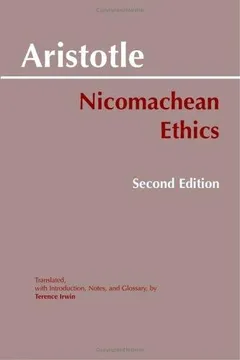
It also assumes the Nicomachean Ethics. That work ends by saying the study of what makes a person good is incomplete without a study of the community that forms them, and the Politics is the continuation. Terms like virtue, habituation and the mean are used here as established. If you have not read the Ethics, at least read its first and tenth books.
One warning. Book I contains the defences of slavery and of male rule over women, and they are not incidental. They are worked out with the same apparatus as the rest, which is exactly what makes them worth studying: they show what the method does when it takes an existing arrangement for a natural fact.
The argument
Book I builds the city from below. Households combine into villages and villages into a city, which is the first association that is self-sufficient and therefore complete. Because a thing’s nature is what it is when fully developed, the city is natural, and humans are by nature suited to it. Aristotle then distinguishes ruling a household from ruling a city, and argues that some people are slaves by nature because they can follow reason without having it. He notices the awkwardness himself: many slaves are simply prisoners of war, and he admits this is not natural slavery. He also treats acquisition, distinguishing household provision, which has a limit set by use, from money-making, which has none.
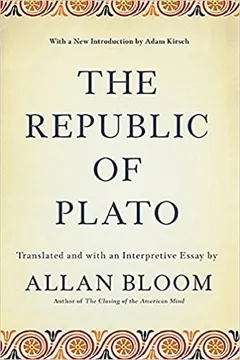
Book II reviews rival proposals. Plato’s Republic gets the longest treatment, and Aristotle’s objection is practical: shared wives, children and property would weaken affection rather than extend it, since what everyone owns nobody looks after. He then examines Sparta, Crete and Carthage and the laws of Solon and others.
Book III is the heart of the work. Who is a citizen? Aristotle answers that a citizen is one entitled to share in judging and holding office, which makes citizenship an activity rather than a status. Is a city the same city under a new constitution? What is the right basis for distributing office? All the standard answers are partly right and treat their own claim as complete. He gives the argument for the wisdom of the many, that a crowd pooling its judgement may surpass any individual, and also the argument that a single outstandingly virtuous person should simply rule. The six-fold classification appears: kingship, aristocracy and polity govern for the common good; tyranny, oligarchy and democracy govern for the rulers.
Books IV to VI turn to what is possible rather than best. Regimes come in varieties, and the most durable is a mixture of oligarchic and democratic elements resting on a substantial middle group, since the very rich will not obey and the very poor are too easily led. Book V is a study of revolution, listing causes and cases, and Book VI examines how democracies and oligarchies can be arranged to last. There is also a cold-eyed passage on how a tyrant preserves himself, either by the usual brutality or by imitating a king.
Books VII and VIII describe the best regime: a city of moderate size and good location, whose citizens are freed from labour for the sake of leisure, understood not as rest but as the activity worth doing for its own sake. Education is public and compulsory, and Book VIII discusses gymnastics and above all music, which Aristotle thinks shapes character directly. The text breaks off unfinished.
How to read it
Read Book I, Book III, Book IV chapter 11, Book V, and Book VII chapters 1 to 3. That is the argument. Book II is worth it if you have read the Republic, since it is the best ancient criticism of it. Books VI and VIII can wait.
Read Book III slowly and in order. It is where the questions are posed that the rest of the work answers, and the chapters on distributive justice and on the many are the ones later political theory keeps returning to.
Do not read the classification of regimes as a ranking of modern political systems. Aristotle’s democracy means direct rule by the poor majority, with offices filled by lot and no separation of powers, and his polity, the mixed regime he favours, is closer to what we would call a constitutional republic. Mapping his terms onto ours produces nonsense.
Deal with Book I directly rather than skipping it. The useful exercise is to locate the exact step where the argument for natural slavery fails, and then ask whether the failure is local or whether it infects the method of reasoning from function to nature.
Lord for literal accuracy, Sinclair and Saunders for readability, Reeve if you want notes that connect every passage to the Ethics.
Questions it raises
- If the city exists to produce good lives, who decides what a good life is, and what may be done to citizens who disagree?
- Aristotle says the whole is prior to the part. Does that leave any ground for individual rights against the community?
- The natural slavery argument fails by his own admission in practice. Does the theory survive the concession?
- Can a constitution be judged good if it is stable and peaceful but produces no one admirable?
- Is the middle-class thesis an empirical observation or a preference dressed as one?
- Citizenship means ruling and being ruled in turn. What happens to that idea in a state of millions?
Highlights
Man is by nature a political animal.
The Greek word means an animal belonging to a city, which is narrower and stranger than the English suggests.
He who is unable to live in society, or who has no need because he is sufficient for himself, must be either a beast or a god.
The claim that self-sufficiency is not a human option.
A state exists for the sake of a good life, and not for the sake of life only.
The sentence that separates Aristotle from every purely protective theory of the state.
Aristotle argues that some people are slaves by nature, on the ground that they can perceive reason without possessing it, then concedes that those enslaved by war and law often are not.
Paraphrase.
He observes that the best political community is run by the middle sort, and that cities with a large middle group are least prone to faction.
Paraphrase.