The Communist Manifesto
by Karl Marx · Manifest der Kommunistischen Partei
Assigned by 7 of the 9 reading lists
- Written
- 1848
- Form
- Political theory
- Language
- German
- Length
- Short · 50 ppunder 120 pages
- Difficulty
- Approachable1 of 5 for a first-year reader
We recommendThe Communist Manifesto, translated by Samuel MoorePenguin Classics, 2002The 1888 English text authorised by Engels, with Gareth Stedman Jones's long historical introduction.
Also good
- Samuel Moore. David McLellan's edition, shorter apparatus and a clear account of what changed between printings.
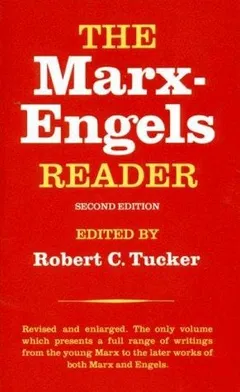
- Various. Robert Tucker's anthology puts the Manifesto next to the 1844 manuscripts and the later writings.
These links go straight to Amazon and Bookshop.org and earn this site nothing today. Prices are the same either way. How this works.
A pamphlet written by Marx with Friedrich Engels for the Communist League and published in London in February 1848, weeks before the revolutions of that year. Its first section argues that all recorded history is the history of class struggle, and that the bourgeoisie, having transformed the world more thoroughly than any class before it, has produced in the proletariat the class that will overthrow it. The second answers the standard objections and lists ten immediate measures, including the abolition of private property in the means of production. The third criticises rival socialisms. The fourth, barely a page, calls on workers everywhere to unite.
Why it's on the list
Nothing else this short has moved as many people. Within seventy years of its printing, parties describing themselves by its programme governed a sixth of the world's land, and the vocabulary it popularised, bourgeoisie and proletariat, class consciousness, the means of production, is now used by people who have never read a page of Marx. It also contains the best description ever written of what capitalism does: the passage on how the bourgeoisie dissolves every settled relation, custom and trade is quoted approvingly by economists who hate its conclusions. Programs assign it because it is the clearest statement of the claim that history has a direction driven by material interests rather than ideas, and because it is a case study in how a piece of political writing can be both analysis and weapon.
Key themes
- Money and class
- Class is defined by a relation to production rather than by income or status, which is what lets the pamphlet treat a banker and a shopkeeper as the same kind of thing.
- History and progress
- History moves by the conflict of classes and each ruling class creates the class that will destroy it. Capitalism is treated as genuinely progressive and therefore doomed.
- Society and the state
- The state is described as a committee for managing the affairs of the whole bourgeoisie, which is why capturing it, not reforming it, is the proposal.
- Liberty and rights
- The pamphlet accepts that it intends to abolish a kind of freedom, the freedom to buy and sell, and argues that for most people that freedom was never available.
- Power and authority
- Authority here is economic before it is political. Law, religion, family and morality are treated as expressions of whoever controls production.
Overview
Forty pages, commissioned. The Communist League, a small organisation of German emigrant workers, asked Marx to produce a statement of principles at its congress in London in late 1847. Engels had already drafted two versions in question and answer form, and Marx rewrote the whole thing as continuous prose in January 1848. It was printed in German in London in February. Almost nobody read it at the time. The revolutions that broke out across Europe that spring owed it nothing, and it only became famous after 1871.
The form matters. This is not a treatise, and it does not argue like one. It asserts, narrates, mocks its opponents and ends on an imperative. Marx’s full economic case would take another twenty years and three volumes of Capital. What the pamphlet gives you is the historical picture that case was meant to support, written at speed by a man of twenty-nine.
The later prefaces are worth reading, and good editions include them. Marx and Engels revisited the text repeatedly between 1872 and 1893, conceding that the ten measures in section two were already out of date and that the Paris Commune had taught them the state machinery could not simply be taken over intact.
The argument
The preamble states the occasion: communism is being treated as a menace all over Europe, so the communists will publish their views instead of letting others describe them.
Section one, Bourgeois and Proletarians, is the substantial part. It begins with the claim that all recorded history is class struggle, runs quickly through freeman and slave, patrician and plebeian, lord and serf, and then settles on the modern pairing. The bourgeoisie is presented as a revolutionary class: it destroyed feudalism, created the world market, replaced local production with global exchange, stripped every occupation of its dignity and turned all relations into money relations. Marx gives it enormous credit. It has, he says, accomplished wonders greater than the pyramids and the cathedrals.
But the same forces that let it succeed undo it. Production has become social while ownership remains private, so the system lurches into crises in which goods and capacity are destroyed for lack of buyers. Meanwhile it concentrates workers in cities and factories, gives them railways, newspapers and a common condition, and so manufactures its own opposition. The proletariat is the first class with no property to defend and therefore, Marx argues, the first whose victory abolishes class rather than replacing one ruling group with another.
Section two, Proletarians and Communists, answers objections. Communists are not a separate party with interests of their own. They propose to abolish bourgeois property, not personal possessions. The charges that they would destroy the family, the nation and culture are met by arguing that capitalism has already destroyed these for the working class. Then come the ten measures: expropriation of land, a heavy progressive income tax, abolition of inheritance, centralisation of credit and transport in state hands, state factories, an obligation to work, combination of agriculture and industry, and free public education. The section ends with the goal, an association in which the free development of each is the condition for the free development of all, and with the prediction that the state will lose its political character as class antagonism disappears.
Section three is a settling of accounts with rivals: reactionary socialism that wants the guilds back, bourgeois socialism that wants reform without conflict, and the utopian schemes of Saint-Simon, Fourier and Owen, whose honesty Marx respects and whose politics he considers useless.
Section four, one page, positions the communists with respect to the existing opposition parties in each country, and closes with the call to unite.
How to read it
Read it at one sitting, out loud if you can. It was written to be read aloud and the rhythm carries the argument.
Read section one twice. That is where the analysis is. Section two is a period document, and the ten measures tell you more about 1848 than about anything Marx believed permanently; the authors said as much in 1872.
Separate the descriptive claims from the predictive ones. The description of how capitalism dissolves traditional life has held up remarkably well. The prediction that workers’ conditions must worsen until revolution becomes inevitable has not, and the interesting question is which parts of the analysis the failure damages.
Notice what is missing. There is no account of how the new society would make decisions, allocate goods or handle disagreement, and no discussion of what happens if the working class does not want the revolution. Later readers filled those gaps in incompatible ways, which is much of the history of the twentieth century.
Questions it raises
- If every ruling class produces its own successor, what would the proletariat produce?
- The pamphlet praises what capitalism has achieved. Does that praise weaken the case against it or strengthen it?
- Is class, defined by a relation to the means of production, still the sharpest way of describing who has power?
- Marx says the workers have no country. Why did national loyalty prove stronger than class loyalty in 1914?
- What is the status of the ten measures once the authors themselves have disowned them?
- Can a document be read as analysis when it was written to cause the thing it predicts?
Highlights
A spectre is haunting Europe: the spectre of communism.
In 1848 the communists were a few hundred people. The sentence describes the fear rather than the force.
The history of all hitherto existing society is the history of class struggles.
Engels added a footnote in 1888 restricting this to written history, after reading about early communal societies.
All that is solid melts into air, all that is holy is profaned, and man is at last compelled to face with sober senses his real conditions of life, and his relations with his kind.
The centre of the pamphlet's account of what capitalism dissolves, written in something close to admiration.
The bourgeoisie, it says, has left no other bond between people than naked self-interest and cash payment, and has drowned religious fervour and chivalric enthusiasm in icy water.
Paraphrase.
The proletarians have nothing to lose but their chains. They have a world to win. Working men of all countries, unite!
The last lines. The German has them lose only their chains, not their chains and their illusions.