The Histories
by Herodotus · Ἱστορίαι
Assigned by 8 of the 9 reading lists
- Written
- c. 430 BCE
- Form
- History
- Language
- Greek
- Length
- Long · 700 pp300 to 700 pages
- Difficulty
- Demanding3 of 5 for a first-year reader
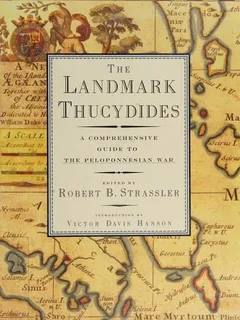
We recommendThe Landmark Herodotus, translated by Andrea L. PurvisAnchor, 2009Maps on nearly every page and clear notes; the edition that makes the geography followable.
Also good
- Aubrey de Sélincourt. The cheap paperback most seminars fall back on, revised with John Marincola's notes.
- Robin Waterfield. Crisp modern English and a strong introduction on how Herodotus gathered his material.
These links go straight to Amazon and Bookshop.org and earn this site nothing today. Prices are the same either way. How this works.
The first work of history in the Western tradition, in nine books, on the wars between Greece and Persia. Herodotus begins with the rise of Croesus of Lydia and the Persian empire under Cyrus, then detours through Egypt, Babylon and Scythia, describing customs, monuments and marvels, before narrating Darius' failed expedition at Marathon and Xerxes' great invasion, the battles of Thermopylae, Salamis and Plataea, and the Greek victory. Throughout he records what he was told, names his sources, weighs competing versions, and returns to the theme that great prosperity invites a fall. He calls the project an inquiry, and the Greek word for inquiry is where our word history comes from.
Why it's on the list
Herodotus invented a way of finding things out. Before him, the past in Greek reached the present through poetry and genealogy; he went to places, asked people, compared their answers, and told you when he did not believe what he had been told. That method, and his willingness to report a story he doubted rather than suppress it, is why programs still open the study of history with him. He also set the terms of an argument the Greeks were about to have with themselves. His Persians are not monsters, his Greeks are not heroes by nature, and the thing he thinks made the difference is the way a free city fights compared with subjects who fight under the whip. Every later account of why small republics beat large empires starts here.
Key themes
- Liberty and rights
- The contrast between Greek self-rule and Persian subjection is the engine of the book, and Herodotus tests it rather than asserting it, showing free cities behaving badly and Persian nobles speaking wisely.
- Power and authority
- Each Persian king expands until expansion destroys him. The pattern is the closest thing Herodotus has to a law of politics.
- Fate and freedom
- Oracles come true, but only in the words the hearer refused to examine. Croesus destroys a great empire, as predicted, and it is his own.
- Nature and the cosmos
- Rivers, deserts and the sheer size of Asia set limits that armies cross at their peril. Geography in Herodotus does moral work.
- Society and the state
- Custom is the subject of the ethnographic books. Herodotus shows that what looks monstrous abroad looks obvious at home, and declines to rank the two.
Overview
The Histories is nine books long, and only the last four are about the war most readers come for. Herodotus says at the start that he wants to record why Greeks and Persians fought, and he takes the question of causes so seriously that he goes back three generations and sideways across three continents before the first Persian soldier reaches Greek soil.
The shape is that of an expanding empire. Book 1 follows Croesus of Lydia to his ruin and then Cyrus of Persia to his; each conquest brings a new people into the story, and each new people gets its description. Book 2 is almost entirely Egypt, because Cambyses invaded it: the Nile, the pyramids, mummification, the priests and their chronologies. Book 3 covers Cambyses’ madness and the coup that puts Darius on the throne, including a debate among conspirators about whether monarchy, oligarchy or democracy is best. Book 4 takes Darius north against the Scythians, whose refusal to hold any fixed ground defeats him, and includes Libya for good measure. Book 5 turns to the Ionian revolt, the spark. Book 6 ends at Marathon. Books 7, 8 and 9 are Xerxes’ invasion: the mustering at Sardis, Thermopylae, the burning of Athens, Salamis, Plataea and Mycale.
Herodotus is a talker. He interrupts himself, tells you that he is interrupting himself, and promises to return to the main line, which he usually does. The digressions are not padding. They are how he builds the world the war happens in.
What happens
Croesus, rich and confident, asks the Delphic oracle whether to attack Persia and is told he will destroy a great empire. He attacks, and the empire he destroys is his own. Cyrus takes Lydia, then Babylon, then dies campaigning in the far east against a queen who sends his head back in a wineskin. Cambyses conquers Egypt and comes apart. Darius seizes the throne, fails against the Scythians, and then faces revolt in the Greek cities of Asia Minor, which Athens helps. Punishment follows: a fleet sails, and in 490 the Athenians and Plataeans meet it at Marathon and win in the open field, alone.
Ten years later Xerxes comes with everything. Herodotus gives him a council scene, a dream that pushes him on, a canal cut through a peninsula, and a number for his army so large that later historians have argued about it ever since. Three hundred Spartans and their allies hold the pass at Thermopylae until a local man shows the Persians a path around, and Leonidas dies covering the retreat. Athens is evacuated and burned. Themistocles manoeuvres the Greek fleet into the narrows at Salamis, where the Persian numbers become a liability, and wins. Xerxes goes home; his general Mardonius stays and is killed at Plataea the following summer. The book ends not in triumph but with a grim story about Persian atrocity and a warning about soft countries breeding soft men.
How to read it
Read Book 1, then Book 3 chapters 80 to 84 for the constitutional debate, then Books 6 to 9 straight through. If you are short of time, sample Book 2 rather than reading it whole, and come back to it later; it is the best of the ethnography and the least connected to the war.
Keep two habits. First, notice whenever Herodotus marks his evidence. He says “the Egyptians say”, or “I know this because I asked”, or “I am obliged to report this but not to believe it.” Those phrases are the birth of a discipline, and they tell you how to weigh what follows. Second, watch for stories that repeat. Warnings ignored, dreams obeyed, rivers crossed, advisers overruled: the pattern is his argument about power, delivered as narrative rather than as analysis.
The commonest misreading is to treat him as a charming liar, the credulous one, with Thucydides as the serious historian. Archaeology and Near Eastern texts have confirmed a good deal of what looked fanciful, and where he reports a marvel he usually flags it. He is also funnier and broader than his successor, and he is interested in questions Thucydides drops entirely, like what other peoples believe and why.
Get an edition with maps. The Landmark is bulky but it puts the map on the page you need it, which matters more in this book than in any other ancient text.
Questions it raises
- Herodotus offers causes at several scales: an insult, a revolt, an imperial habit of expansion, divine jealousy of the very great. Which does the book actually endorse?
- Does he believe the oracles, or does he believe that people’s belief in oracles shapes what they do?
- His Persians are given speeches as good as any Greek’s. Is the book a defence of Greek freedom or a study of how empires behave?
- What is the ethnography for? Is Egypt in the book because Cambyses invaded it, or because Herodotus needs a standard of comparison for Greece?
- When he reports a story he does not believe, is he being careless or unusually honest about the state of his evidence?
- The last chapter warns that rich lands produce weak men. Who is that warning aimed at in 430 BCE?
Highlights
These are the researches of Herodotus of Halicarnassus, which he publishes, in the hope of thereby preserving from decay the remembrance of what men have done, and of preventing the great and wonderful actions of the Greeks and the Barbarians from losing their due meed of glory.
The first sentence of Western history states a purpose, names an author, and promises to be fair to both sides.
Solon tells Croesus that no one can be called happy while he still lives, since a god can throw down the most fortunate man at the end, and only a finished life can be judged.
Paraphrase. The scene sets up the whole book's pattern of prosperity and reversal.
Asked what wages they fight for, the Greek exiles tell Xerxes that the Spartans have no master but law, and will do what law commands even when it commands them to die.
Paraphrase of the exchange between Xerxes and Demaratus.
Artabanus warns his nephew that of all human sorrows the sharpest is to see clearly and be able to do nothing.
Paraphrase. A Persian at a dinner party foresees his own army's ruin.